19 Oct 2026
Mapping the Interplay Between Consumer Regulations and Geyser Product Development Cycles
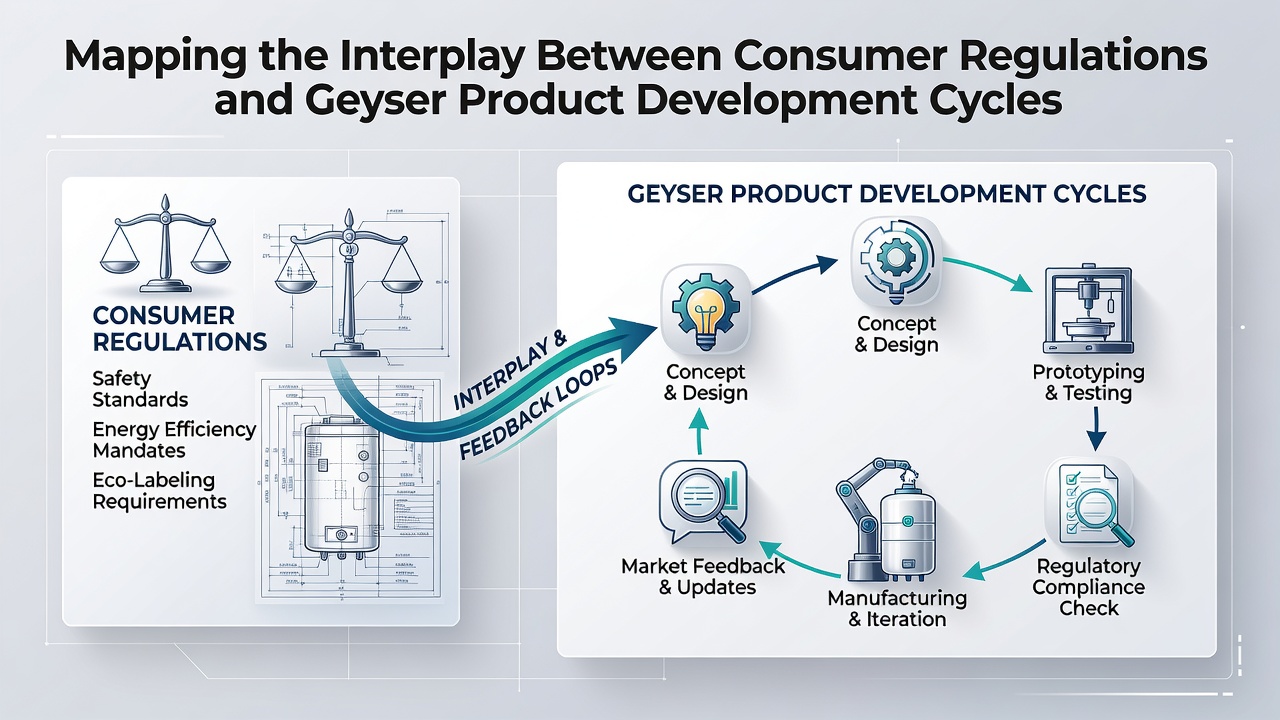
Consumer regulations shape geyser product development cycles through mandatory safety standards, energy efficiency targets, and environmental compliance rules that manufacturers must integrate at every stage from initial concept to market release. These rules create structured timelines where companies conduct compliance testing, redesign heating elements, and adjust insulation materials while aligning with regional requirements that differ across markets.
Regulatory Frameworks Across Regions
Data from government agencies shows that energy performance mandates drive the majority of changes in geyser engineering schedules. The U.S. Department of Energy updates its water heater efficiency rules periodically, which forces developers to recalibrate thermostat controls and heat exchanger designs to meet new thresholds before products reach distribution networks. In parallel, the European Commission enforces Ecodesign directives that specify minimum performance criteria for appliances, prompting firms to incorporate smart sensors and low-emission components during the prototype validation phase.
Australian authorities maintain separate standards under the Greenhouse and Energy Minimum Standards program, and these require third-party verification of standby power losses before any geyser model receives approval for sale. Observers note that such layered requirements extend development cycles by six to eighteen months as teams iterate through multiple rounds of laboratory validation and field trials to satisfy all applicable clauses.
How Regulations Influence Development Timelines
Manufacturers typically align their internal roadmaps with upcoming regulatory deadlines because missing a compliance date can block market access entirely. Research indicates that when new safety certifications for pressure relief valves or temperature cut-off switches take effect, engineering groups shift resources toward accelerated testing protocols while maintaining parallel work on cost optimization and user interface improvements. This dual focus often results in modular platform designs that allow quick swaps of certified parts without restarting the entire development process.
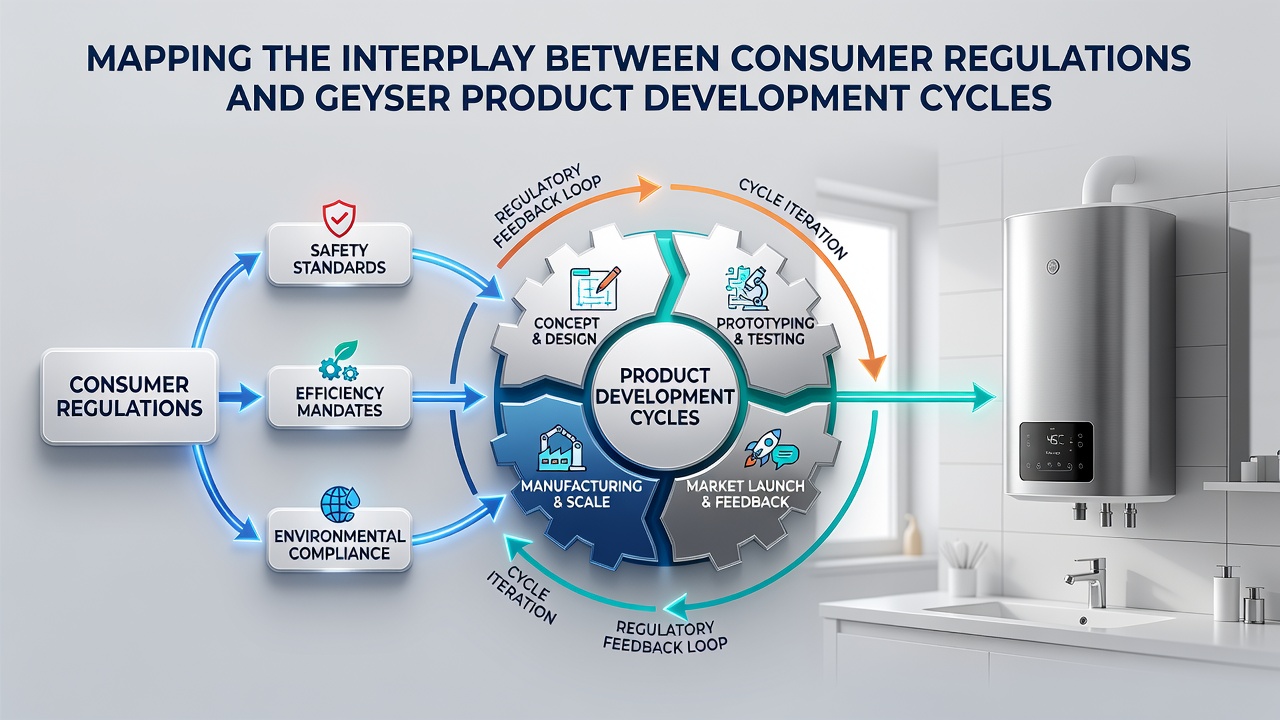
What's interesting is how consumer protection rules around warranty disclosures and labeling accuracy interact with these cycles. Companies must finalize energy rating labels and instruction manuals months ahead of launch, which means regulatory review teams join product teams earlier than in less regulated industries. Figures from industry reports reveal that projects incorporating regulatory input at the concept stage experience fewer late-stage redesigns compared with those that treat compliance as a final checklist item.
Adaptation Strategies in Product Cycles
Teams respond to tightening rules by adopting digital simulation tools that predict how design changes affect both efficiency metrics and safety margins before physical prototypes are built. Studies have found that this approach shortens the iteration loop and allows developers to explore alternative heating technologies such as hybrid heat pump systems that already satisfy stricter future thresholds. Supply chain managers also adjust sourcing strategies to secure components that carry pre-certified environmental declarations, reducing the risk of delays when documentation audits occur.
One study revealed that manufacturers who maintain dedicated regulatory affairs staff embedded within engineering groups achieve faster certification turnaround because they anticipate clause interpretations rather than reacting after submission. Those who've tracked multiple cycles report that overlapping requirements from different jurisdictions encourage the creation of globally adaptable base models that receive region-specific modifications only in the final assembly stages.
Looking Ahead to October 2026
Several jurisdictions have announced phased updates scheduled for October 2026 that will raise minimum energy performance levels for residential water heaters once more. Development teams are already modeling the impact of these changes on current platforms, evaluating whether existing heating element configurations will require replacement with new alloys or whether control software updates alone can deliver the necessary gains. Regulatory bodies in multiple countries have published draft texts that give manufacturers a clear window to prepare documentation packages and schedule verification testing well in advance.
Conclusion
The interplay between consumer regulations and geyser product development cycles produces predictable patterns of testing, redesign, and documentation that companies now treat as core elements of their planning processes rather than external constraints. Data shows that organizations which embed compliance milestones into every phase of the cycle reduce time-to-market risks while still delivering products that meet evolving safety and efficiency expectations across diverse markets.